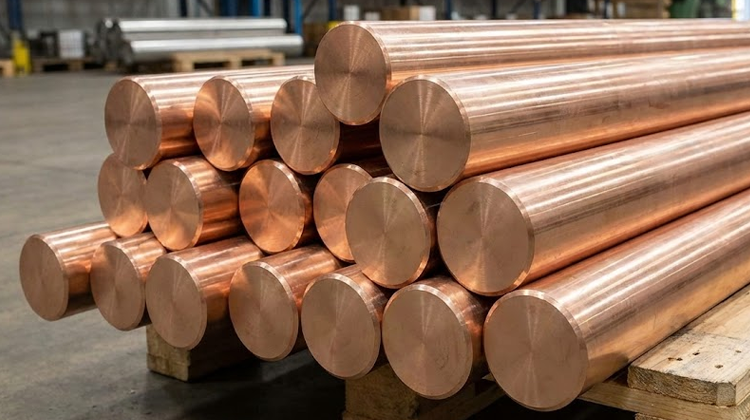
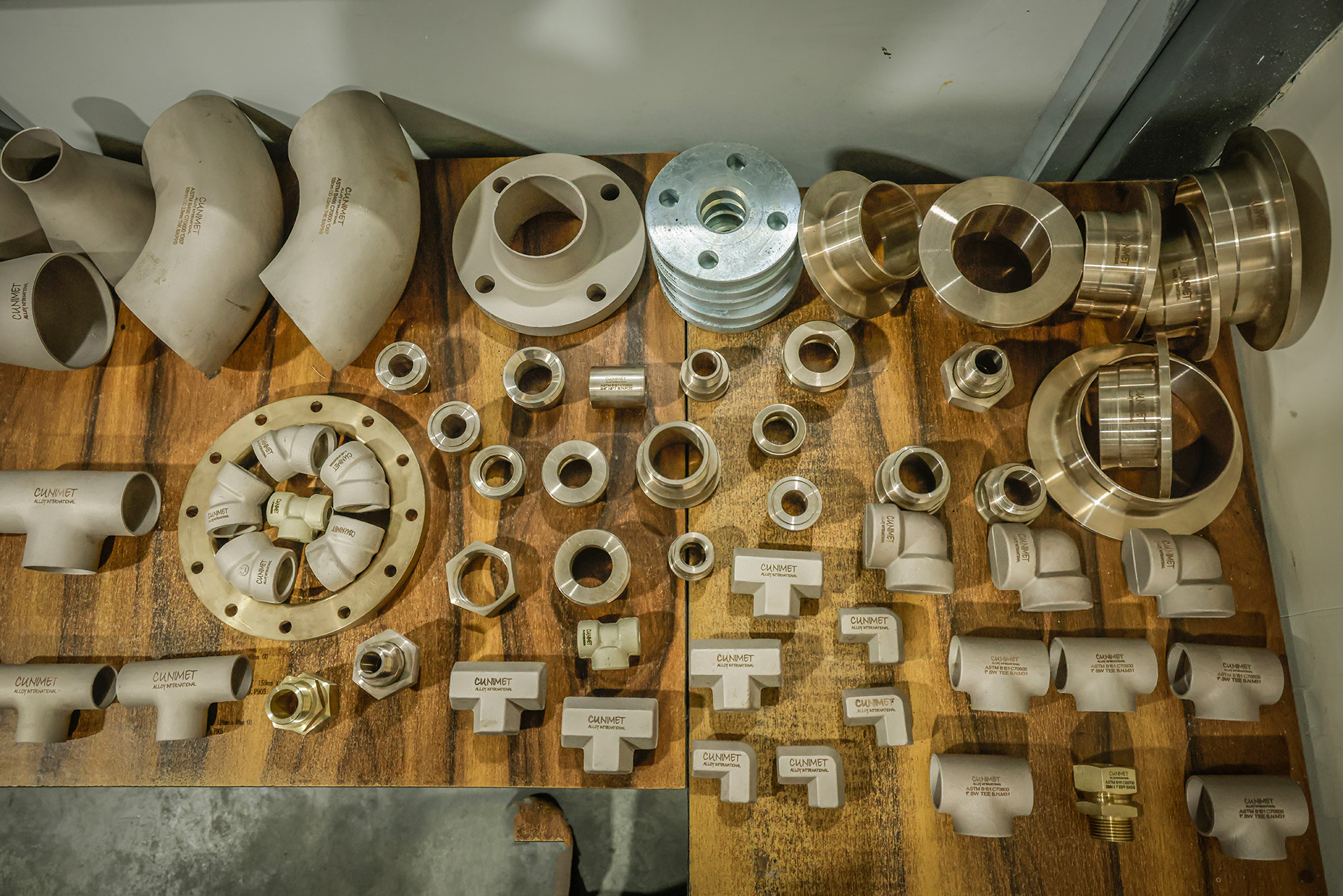

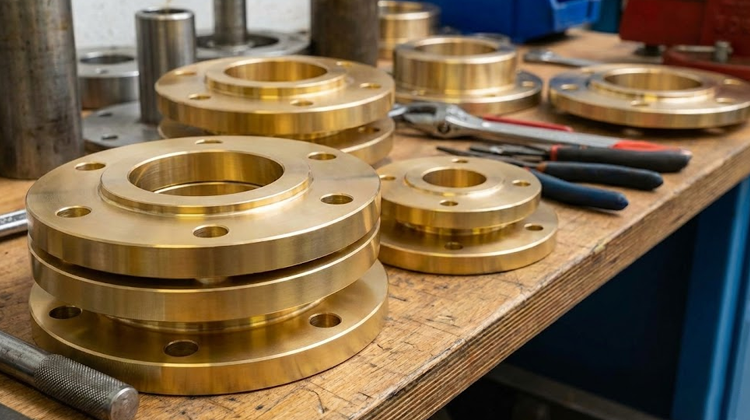
Naval Brass flanges are widely used piping components in marine, offshore and seawater handling systems where moderate strength, good corrosion resistance and long-term reliability are required. Known for their excellent resistance to dezincification and good performance in saltwater environments, Naval Brass alloys have been a trusted material choice in shipbuilding, coastal installations and marine engineering for decades.
This complete technical guide explains what Naval Brass flanges are, their material composition, common grades, manufacturing methods, applicable standards and why they are suitable for marine and offshore applications.
What Are Naval Brass Flanges?
Naval Brass is a special type of brass alloy primarily composed of copper and zinc with a small addition of tin. The presence of tin significantly improves resistance to dezincification and corrosion in seawater environments.
Naval Brass flanges are pipe connection components manufactured from this alloy and are used to connect pipes, valves, pumps and equipment in marine and offshore piping systems. These flanges provide a strong, leak-tight and removable joint, which is essential for maintenance and inspection in shipboard and offshore installations.
Among various Naval Brass alloys, UNS C46400 Naval Brass is the most commonly used grade for flange manufacturing.
Chemical Composition of Naval Brass (UNS C46400)
The typical chemical composition of UNS C46400 Naval Brass is:
- Copper (Cu): Balance
- Zinc (Zn): Approximately 39–41%
- Tin (Sn): Around 0.75–1.25%
- Minor elements: Iron and lead in controlled limits
The addition of tin is the key difference between Naval Brass and standard brasses. Tin improves resistance to dezincification and enhances corrosion performance in seawater and mildly aggressive environments.
Why Naval Brass Is Suitable for Marine and Offshore Use
Marine and offshore piping systems operate in challenging environments that involve continuous exposure to seawater, humid atmospheres, temperature variations and mechanical vibration.
Naval Brass flanges are suitable for these conditions because:
- They offer good resistance to seawater corrosion
- They provide improved dezincification resistance compared to common brass
- They maintain good mechanical strength for medium-pressure systems
- They have excellent machinability and fabrication characteristics
For these reasons, Naval Brass flanges are commonly specified for seawater lines, cooling water systems and auxiliary marine services.
Dezincification Resistance – A Critical Advantage
Dezincification is a selective corrosion process in which zinc is leached from brass alloys when exposed to certain water chemistries, especially warm and stagnant seawater.
Naval Brass contains tin, which significantly slows down this process. As a result, Naval Brass flanges maintain their structural integrity and surface quality for longer periods compared to conventional high-zinc brasses.
This property is especially important for marine piping, heat exchanger connections and coastal infrastructure.
Mechanical Properties of Naval Brass Flanges
UNS C46400 Naval Brass offers a balanced combination of strength and ductility, making it suitable for flange manufacturing and installation.
Typical mechanical characteristics include:
- Good tensile and yield strength for low to medium pressure service
- Excellent ductility, allowing easier forming and machining
- Good resistance to cracking under vibration and thermal cycling
While Naval Brass does not offer the same strength level as Nickel Aluminium Bronze or stainless steel, it is more than adequate for many auxiliary marine and seawater systems.
Manufacturing Methods of Naval Brass Flanges
Naval Brass flanges can be manufactured by:
Forging
Forged Naval Brass flanges are produced by hot forming the alloy and then machining to final dimensions. Forged flanges offer:
- Improved grain structure
- Higher structural integrity
- Better resistance to pressure and mechanical loading
Forged flanges are preferred for critical and higher-reliability applications.
Machining from Rolled or Extruded Stock
Naval Brass flanges can also be machined directly from plates, rods or bars. This method is widely used for custom sizes and low-volume production.
Both manufacturing routes must follow strict quality controls to ensure compliance with dimensional and metallurgical requirements.
Common Types of Naval Brass Flanges
Naval Brass flanges are supplied in multiple standard configurations, including:
- Slip-On Flanges
- Socket Weld Flanges
- Threaded Flanges
- Blind Flanges
- Lap Joint Flanges (with suitable stub ends)
These flange types are selected based on pressure rating, pipe size, installation constraints and maintenance requirements.
Applicable Standards for Naval Brass Flanges
Naval Brass flanges are manufactured in accordance with international material and dimensional standards.
Material Standards
The most widely used material standard for Naval Brass is:
- ASTM B21 / B21M – Naval Brass and Copper-Zinc-Tin alloy bars and shapes
- ASTM B124 / B124M – Copper and copper alloy forging rod, bar and shapes
The commonly referenced material grade is:
- UNS C46400 – Naval Brass
Flange Dimensional Standards
Naval Brass flanges are typically manufactured in accordance with:
- ASME B16.5 – Pipe flanges and flanged fittings
- ASME B16.47 – Large diameter steel flanges (used when applicable for pattern and dimensions)
In marine projects, flanges may also be supplied to project-specific drawings and naval specifications.
Typical Marine and Offshore Applications
Naval Brass flanges are extensively used in:
- Seawater cooling pipelines
- Ballast and bilge systems
- Fire-fighting and wash-down lines
- Condenser and heat exchanger connections
- Shipboard utility piping
- Coastal and port infrastructure
They are particularly suitable for systems carrying seawater, brackish water and low-chloride service fluids at moderate pressures and temperatures.
Limitations of Naval Brass Flanges
While Naval Brass flanges perform well in many marine environments, it is important to understand their limitations.
Naval Brass is not recommended for:
- Highly polluted or strongly acidic seawater
- High-velocity seawater systems prone to severe erosion
- High-pressure or high-temperature process lines
- Critical offshore production piping
In such demanding applications, materials such as Nickel Aluminium Bronze, Cu-Ni alloys or duplex stainless steels are often specified.
Naval Brass vs Other Marine Copper Alloys
Compared to standard brass alloys, Naval Brass offers superior dezincification resistance and longer service life in seawater.
Compared to Copper-Nickel alloys (90/10 and 70/30), Naval Brass has lower corrosion resistance and strength but is more economical and easier to machine.
Compared to Nickel Aluminium Bronze, Naval Brass provides lower strength and erosion resistance but remains suitable for auxiliary and utility marine systems where extreme performance is not required.
Quality and Inspection Requirements
For marine and offshore use, Naval Brass flanges typically undergo:
- Chemical composition verification
- Mechanical testing (as applicable)
- Dimensional inspection
- Visual and surface quality checks
Depending on project requirements, additional inspections such as ultrasonic testing or third-party inspection may be applied for forged flanges.
Naval Brass flanges are reliable and cost-effective piping components for marine and offshore applications that involve seawater, cooling water and auxiliary services. Manufactured primarily from UNS C46400 Naval Brass, these flanges offer good corrosion resistance, improved dezincification resistance due to tin addition, and adequate mechanical strength for medium-duty piping systems.
By complying with recognized material standards such as ASTM B21 and ASTM B124 and dimensional standards such as ASME B16.5, Naval Brass flanges continue to play an important role in shipbuilding, offshore structures and coastal infrastructure. When selected appropriately and installed in suitable operating conditions, they deliver long service life and dependable performance in marine environments.